Robotics
 The Robot ReportAugust 17, 20263 min read
Gravis uses environmental sensing to bridge the sim-to-real gap. S. reshoring and defense needs could change that.
Gravis Robotics today announced that SoftBank is investing $200 million in its Series A round, which it claimed is the largest in construction robotics history. “To build the future, we need to change the world, literally,” said Ryan Luke Johns, co-founder and CEO of Gravis Robotics. “Whether we are building housing, modernizing energy grids, or scaling data centers, every project starts with moving earth.
” “Our machines are built for the messy, unscripted reality of live jobsites that breaks traditional automation,” he added. ” The Zurich-based company retrofits existing excavators and construction equipment with its Gravis Rack autonomous control kit and software. Register now and save on your pass to RoboBusiness 2026 Gravis Robotics develops physical AI for earthmoving While most physical AI operates in static worlds, such as self-driving car steering around obstacles on fixed pavement without disturbance, construction systems are designed to do the exact opposite, noted Gravis Robotics.
It cited the example of an excavator that deliberately reshapes the earth. ” “Skilled operators read the earth through subtle physical feedback — listening to the engine strain, sensing the machine vibration and reacting to hydraulic resistance,” stated Dominic Jud, co-founder and chief technology officer of Gravis Robotics. ” “We didn’t try to simplify the world for our software; we gave it the physical intuition to handle real jobsites with precision that goes beyond what any human can feel from inside the cab,” he said.
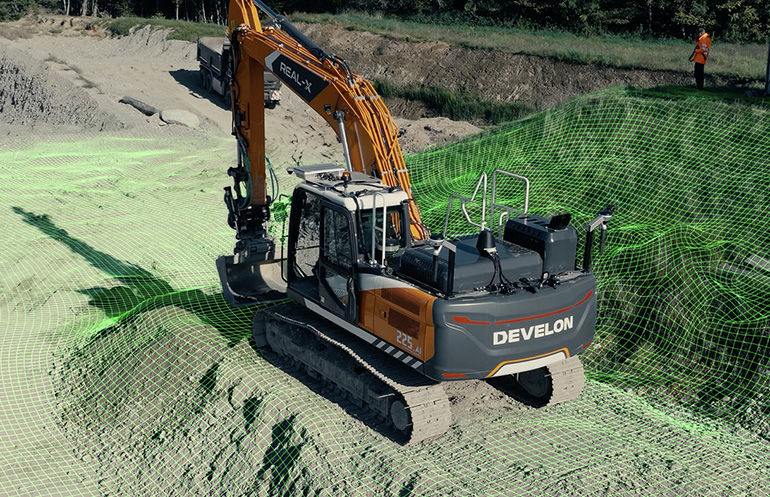
The Gravis Rack provides an operating system for autonomous construction. Source: Gravis Robotics Construction autonomy designed for mixed fleets “The heavy equipment market is highly fragmented, with roughly two-thirds of global demand sitting outside the top-three manufacturers,” explained Gravis Robotics. ” Gravis asserted that its AI world model incorporates the performance characteristics of a range of manufacturers’ products rather than imitate an individual operator.
The model is thus “generalizable and adaptable in a way single-machine systems can’t match,” it said. The company claimed that the Gravis Rack acts as an operating system for mixed fleets. It has been installed on machinery from Caterpillar, Case, Develon, John Deere, JCB, Hitachi, Sumitomo, Yanmar, Volvo, and more.
“Because our learning-based models excel in adapting to the nuances of machines, the same core software can drive a compact excavator or a machine five times its size without custom reprogramming,” said Gravis. The company said its understanding of individual machines and how they interact with the ground allows it to improve productivity by up to 30% compared with peak manual operations. In addition, Gravis said its Slate interface can improve worksite safety.
Gravis built its software stack to offer operational flexibility with a spectrum between AI-augmented manual control and full autonomy. With Gravis Copilot, operators can stay in the cab, using real-time 3D guidance and hazard detection to increase their daily performance. When full autonomy is engaged, those operators can step away and supervise entire robotic fleets at once.
Regardless of the mode, Gravis gravis said every machine with its kit acts as a mobile sensor, automating surveying and hazard mapping in the background as other work gets done. K. Source: Gravis Robotics SoftBank funding to help Gravis scale Gravis Robotics said its Series A funding will help it autonomous heavy machinery across jobsites globally.
“Physical AI is central to SoftBank’s vision for the next phase of AI. Gravis is bringing AI-powered autonomy to construction, helping build smarter, more efficient infrastructure, and we look forward to supporting its mission,” said Dai Sakata, managing director of SoftBank Group. Gravis has already deployed its systems across four continents and proven them across diverse real-world machinery and sites.
K. government-backed CAM Pathfinder project with Flannery Plant Hire, the country’s largest equipment rental provider. ” The post Gravis Robotics raises $200M for autonomous construction appeared first on The Robot Report .
The Robot Report
therobotreport.com