Loyalty Platforms 101: The Complete Guide to Gaming's Fastest-Growing UA Channel
 Deconstructor of FunDecember 1, 20256 min read1 views
In a recent podcast conversation, I sat down with Ido Raz, founder of VYBS, to decode loyalty platforms—a channel that's evolved from the sidelines to commanding 25-50% of major studios' UA budgets. The Incentivized Traffic Myth If you've been in the industry for 15 years, "incentivized" triggers memories of 10-cent burst campaigns and users who barely open apps. That world is dead.
Today's loyalty platforms acquire extremely high-end users at premium prices, delivering strong performance. The association with cheap, low-quality installs is the biggest myth holding studios back. The biggest misconception is that loyalty platforms are magic.
Throw in a dollar, get return-on-ad-spend (ROAS) automatically. They're not. Like any channel, you need to specialize with proper event implementation, sufficient content, understanding game mechanics, identifying sticky events, and ensuring users have enough time to reach those events.
Why? Because fast recouping equals healthy growth . That's the value proposition of a loyalty platform in one sentence.
Compress years of payback into months, unlock cash flow that fuels growth, and access one of the few channels where optimization extends beyond creative testing. Loyalty platforms have gone from auxiliary channel to mainstream growth strategy. Understanding Loyalty Platforms What Actually Is a Loyalty App?
Download a loyalty app. Choose the game(s) you want to play. Earn loyalty points for progressing in the chosen games.
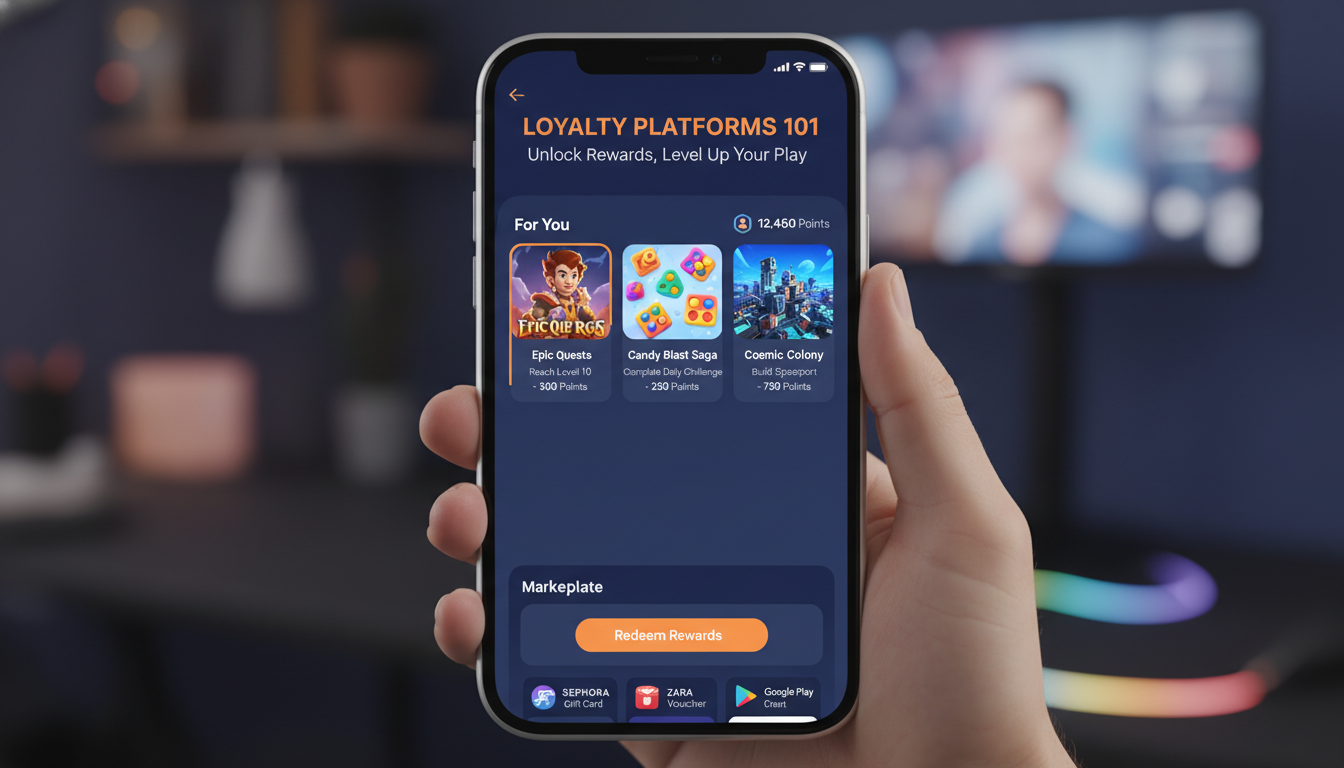
A loyalty app is an app where users discover games through personalized recommendations and earn rewards based on their progression within those games. But here's what makes them fundamentally different from offerwalls: Offerwalls are ad placements. Loyalty platforms are standalone apps living on users' devices.
While offerwalls send users outside their current game, loyalty platforms push users to stay engaged in the games they've downloaded. The business model is completely different, too. The Player Journey When a user signs into a loyalty platform, they're offered games based on personalization algorithms.
Each game comes with tasks that are either time-based or achievement-based, like reaching a specific level. After selecting a game, users head to the app store to download it. As they progress and complete tasks, they accumulate loyalty points that can be redeemed for real-world rewards like Sephora, Zara, or Google Play gift cards.
Think of it as an app store on steroids: personalized discovery plus tangible rewards for actual engagement. The Business Model Evolution Game developers are the clients, and while the basic model is cost-per-install (CPI), the industry has evolved toward return-on-ad-spend (ROAS) based pricing. The Player Quality Question The "Incentivized Traffic = Low LTV" Criticism What happens when the reward structure ends?
Deconstructor of Fun
deconstructoroffun.com