Deconstructor of Fun•March 19, 2025•23 min read•1 views
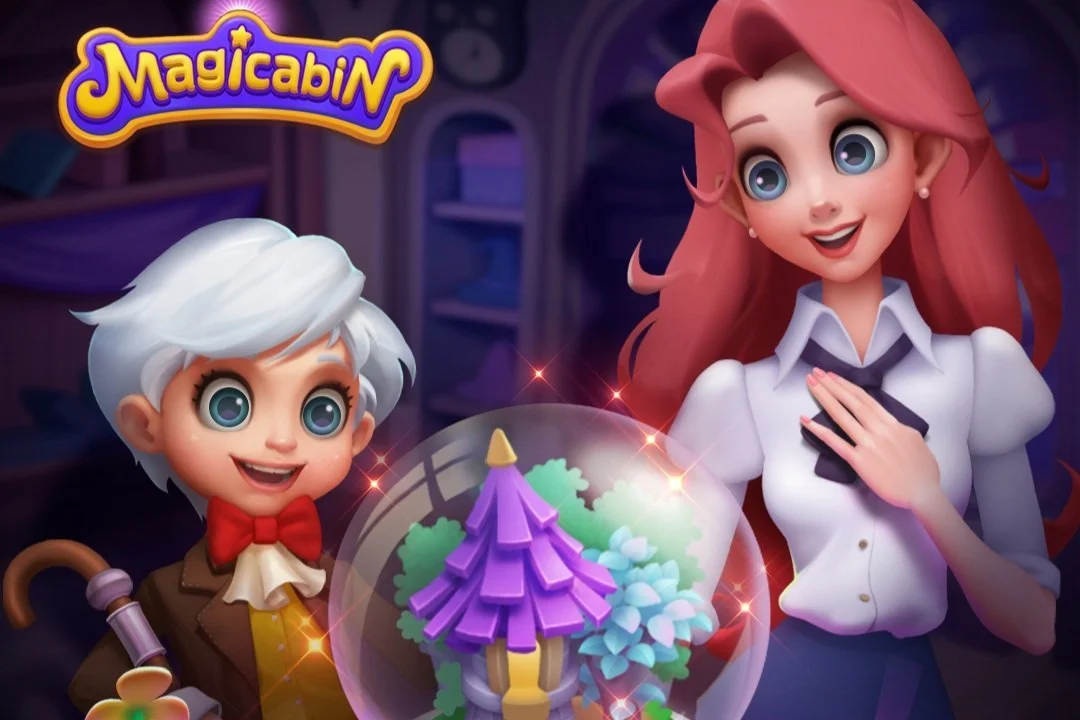
Written by Irina Bragina , Product Manager with 12 years of experience in game development and operations as a Product Manager/Monetization Specialist. Magicabin is a relatively new adventure game, released in 2022 by Ivy Mobile. It has quickly become a top-performing game for the publisher, accounting for over 70% of their revenue in 2024.
I first noticed Magicabin because of my passion for tycoon/adventure games. But I decided to dig deeper after I paid a fortune saw their remarkable ARPDAU on SensorTower. It’s nearly on par with Family Island, the leader in this niche!
Metrics for all countries for 2024, data from Sensor Tower ARPDAU for US only for comparison, data from Sensor Tower Game Overview Magicabin is a cozy simulation game centered around restoring an old castle in the woods. The main character, Ruby, is a young witch who has inherited the castle. Players help her restore and decorate it, learn magic, explore a fantasy world, and make new friends - all within a charming, magical setting.
Core Overview The game revolves around energy , the primary resource allowing players to explore their home location and temporary adventure areas. Energy is spent to remove obstacles and collect resources, which are then used for crafting and progressing in the game. While the basic loop of spending energy and collecting resources may sound simple, what sets Magicabin apart is its complex motivation system , which ensures players stay engaged without feeling trapped in a repetitive cycle.
In-game Currencies Energy is the game’s main limiter and engagement driver. Players must strategize how to obtain and spend energy wisely. Once energy is spent, they must wait for regeneration or purchase additional energy with real money.
This makes energy a crucial part of monetization. Gems are hard currency in the game and difficult to obtain through gameplay. They can be spent on: Additional energy Additional flower beds Skipping timers Expanding crafting slots Buy insufficient resources for crafting and building upgrades Purchasing bombs to clear obstacles Acquiring event energy generators and special furniture Gems are highly valued by players, but the game provides limited free gems, pushing players to spend them wisely.
Soft currency is primarily useful in the early game. Players spend it on: Buildings Flower beds Animals Resources Once all areas and buildings are unlocked, soft currency loses most of its value. Resource Management Obtaining Resources Regular Resources Regular resources in the game are primarily obtained by chopping obstacles and spending energy.
If players can’t find the specific obstacle they need for a resource, they have the option to purchase the resource at the market. However, gathering these resources requires spending soft currency and waiting for them to regenerate, usually within an hour. The core gameplay loop revolves around tapping objects, spending energy, and receiving rewards.
While most objects are clearly tappable, some are hidden easter eggs - decorative elements in the location that, when tapped, provide valuable resources. This encourages players to tap everything they see, adding an extra layer of excitement and a sense of discovery, all while extending session length. They provide unique resources but disappear after a set number of collections.
After disappearance, an animal gives a final gift - energy or a rune piece. Garden Beds Available in two types - fast-growing and slow-growing. Flower beds are unlocked when leveling up, and purchased with soft currency.
Additional garden beds can be purchased with premium currency. However, two special mechanics also encourage resource spending. Order Board Players can sell their resources and get level-up points, soft currency, and a small amount of energy in return.
Once soft currency becomes useless, players can complete these orders to get level-up points, and complete season pass tasks. Dragon and Keys The Dragon Merchant appears every 3 hours with special orders. By completing these orders, players are rewarded with: Dragon key for chest opening Dragon scale for new area unlock Energy Level up points As players explore, they encounter numerous chests scattered throughout the world.
Opening these chests is an essential part of progression, as they contain valuable resources like energy and golden tools. The golden tools, in particular, are crucial since they help unlock new areas and access treasuries packed with even more energy - especially during events. While players frequently find chests and treasuries, the main bottleneck is the availability of keys needed to open them.
Home Location & Progression The game starts at the home location, where players meet key characters and learn the basics of obstacle removal, exploration, and decoration. Quests Once a new level is reached, a player unlocks new quests. Their completion is not mandatory, but rewarding.
Home quests are more like a guidance for a player to not forget to unlock new buildings, and get new flower beds. Buildings Building management is quite complex: Players have to reach a certain level to unlock a new building, After that, the building can be purchased with soft currency, Then players have to build it by spending resources, After the building is ready to use it can be upgraded by spending resources in order to receive perks: shorter craft time, better enhancement, and bigger bonuses for orders. Enhance buildings Fountain provides higher energy capacity.
Its upgrade requires Stones of Light, which can be obtained only in competitions. The higher the place in the competition, the more Stones of Light players receive - so that’s one of the most important motivations to compete for first place. Players can upgrade the pool to improve their energy regeneration rate.
Pool requires complicated craft items, which are hard to obtain. Energy craft buildings Sometimes the player receives small pieces to use in special energy accumulation buildings. In Blender players can spend fruits in order to obtain energy, and in Rune altar - rune pieces.
Cat House Entry point for a cute merge minigame, where players can get an additional energy. Each new level-up rewards players with: Area unlocking New buildings availability More garden beds And most importantly: Higher energy capacity Players start with a small amount of energy - around 50, and by level 30 they may have 100+ energy capacity, which is super important for an energy-based game like Magicabin . Collections and Decoration Occasionally, players come across special gifts that can be opened without using energy.
These gifts contain pieces from one of seven collectible sets. Once a full collection is completed, it can be exchanged for special tokens. Players also receive energy rewards at milestone exchanges - after collecting 5, 10, 15, and 25 tokens.
Even if the allure of decoration gacha isn't strong enough, these milestone rewards encourage players to exchange their collections frequently. As soon as 10 of the collection tokens are collected, they are used to play decoration gacha at a Magic Funhouse. The decoration gacha offers 10 unique themes, allowing players to choose which collection to complete first.
This feature is driven by two key incentives. Firstly, completing a full set of themed decorations rewards players with matching wallpaper and flooring for their in-game home, each increasing the player’s energy capacity. Secondly, acquiring rare and unique furniture pieces boosts the player's decoration score, which directly contributes to earning additional energy and gems.
Players can also enhance their decoration level by constructing buildings or obtaining limited-time event decorations. Exploration Home location is not big enough to provide enough resources to obtain, and it becomes boring very soon. So that’s why exploration is available - players can travel to other locations, and complete special exploration quests there.
The biggest difference from the home location are special additional goals with the valuable rewards. But Magicabin truly excels in live operations, offering time-sensitive expeditions with valuable rewards. They become available almost immediately, unlocking after a player completes their first exploration session, ensuring that all players can participate from the start.
Each expedition typically lasts around three days, during which players explore new locations and uncover a story. While rich in dialogue, the narrative is often self-explanatory, supported by cutscenes, expressive character emojis, and other visual cues. Despite the built-in time pressure, event expeditions incorporate additional mechanics that enhance the experience.
Players have numerous opportunities to gain extra energy: Energy crystals on location Milestone rewards Treasuries opening Energy craft from location resources Chests opening Easter eggs Event tasks journal As players progress through the event location, they earn points by completing predefined actions. The initial milestones are reached fairly quickly, but the difficulty steadily increases, making it nearly impossible to complete all milestones without making a purchase. However, players remain motivated to push forward, as reaching even the closest milestone grants a valuable boost.
This encourages continued engagement, even if full completion remains out of reach for most without additional spending. Solo rewards During events, players earn challenge points for every unit of energy and gems spent, regardless of whether it's at the event location or elsewhere. Solo rewards are relatively easy to achieve, with most players reaching the final milestone within a day.
49. This offer is particularly aggressive, as its total value without the bundled discount would be around $15–16. Players are motivated to secure first place in these competitions as it grants them: Maximum amount of Stones of Light to upgrade the fountain 7 keys and 400 energy, which helps a lot in the next event Unique avatar frame.
Typically, players are matched based on their payment activity or previous rankings. Personally, I’ve noticed that I tend to face stronger opponents after making payments or reaching higher ranks. This creates a competitive environment where players must outplay each other to secure the best possible rewards.
It essentially leads to an ongoing battle, especially when multiple strong players participate in the challenge at the same time. Energy Generators The primary incentive for players to participate in the event is the chance to acquire an energy generator. Some generators provide energy every hour, while others offer it daily.
To obtain a generator, players typically need to collect tokens scattered across the event location, which becomes fully accessible only after completing the main story. A standard generator typically provides 25 energy per day for 30 days, and players usually need to make a small payment to complete the process within that time frame. Additionally, seasonal energy generators occasionally become available at the home location, especially during major events like autumn or winter holidays.
These generators can produce up to 60 energy per day and encourage daily logins so players don’t miss out on the opportunity. Card Collection It seems that card collection features have become a must-have in many games nowadays, and Magicabin is no exception. Card rewards bring an extra layer of excitement, as players eagerly anticipate receiving packs with random cards.
Additionally, there are extra milestones with rewards that add to the motivation. The approximate pricing looks something like this: As shown, the rewards are highly valuable, and players are driven to complete all the sets. However, to achieve this, players need to collect 4- and 5-star cards, which are only available through special offers or at the final milestones of the event journal.
This means players must complete the entire journal, making it nearly impossible to collect everything without significant spending in each event. Take the “Wonder Adventures” card collection from November as an example. Initially, progress was fast, and I completed six collections within the first three weeks.
However during the last three weeks, obtaining new cards became much slower. As you can see, every event starts with a spike in card acquisition, as players can exchange duplicates and purchase valuable items in the shop. Card duplicates can be exchanged in the shop, where high-level packs are also available.
However, players must be exceptionally active to take full advantage of these opportunities. Additional Goals Special live ops during major events like Halloween or Christmas are a great addition to regular events. For instance, here’s what the Christmas event looked like: On the first day of activities, the ARPDAU was higher than usual, which could be attributed to the holiday season and increased player activity.
In general, I think the idea of extending live ops across multiple events is a smart one, as it gives players an extra goal to work toward. Here are a few examples of tasks players encountered during the Christmas holidays: Login rewards As you might have noticed, login rewards aren’t direct economy rewards; instead, they consist of cards or event challenge points. Spend energy challenge The last two milestones of this challenge offered a 4-star card pack and a 5-star card pack.
However, a small payment wasn’t enough to unlock rewards for all milestones. Build the Christmas Tree This was another energy-based challenge, fairly easy to complete, and rewarded players with an energy generator at the end. From a monetization manager's perspective, this challenge could have focused more on encouraging player interaction with the game.
But as a player, I definitely enjoyed it. Event expedition user journey Gameplay by day Here’s my average user experience during the event as a low spender who occasionally makes payments: Day 1: The game is fun and easy. Players are given a lot of content and rewards, including cards, and get to explore about half of the location.
There’s also a generous amount of free energy from the location, and by the end of the day, the event challenge is either completed or nearly completed. Day 2: Things start to slow down a bit. Free energy becomes much scarcer, so players need to log in more frequently to maximize their energy usage.
Sessions are shorter than the first day - players spend their accumulated free energy, then strategize to gather energy from other sources before using it up and exiting the game. Day 3: It becomes almost impossible to progress without making payments. The cost of items in the shop increases, and players risk not completing the event at all without additional spending.
Throughout all three days, players will encounter numerous chests and treasuries to open, as long as they have enough dragon keys to access them. On average, an event requires energy worth about $100+. Players can earn almost half of that through free sources, so the game is essentially anticipating about $50 per player per event.
Of course, it’s much cheaper for those who are more active. The fast-paced event transitions and the availability of the home location and exploration features ensure that players don’t feel lost, even if they miss part of an event or join later than others. Energy sources As mentioned earlier, players approach the game with different goals in mind.
Let’s assume players aim to complete one of the following stages: Complete only the main story and receive rewards. Complete the main story and acquire the energy generator. Complete the entire task journal.
In these three examples of completed events, you can see how the distribution of energy usage changes: For players completing only the main story , most of the energy spent comes from within the event location. A third of the energy is sourced from other mechanics, with the rest coming from milestones and playable ads. For those aiming to obtain the energy generator , a small amount of payment is usually required - typically 1 or 2 small payments, which should be enough for an active player.
Players who want to receive all possible rewards will likely need to purchase nearly half of the energy they use during the event. These figures are, of course, approximate, as it was impossible to create identical conditions for all three events. However, I believe this gives a clear picture of how energy consumption varies depending on the player's goals.
ARPDAU by day I calculated the average ARPDAU for each event day and by weekday, then compared it to the overall average ARPDAU. It turns out that the day of the week significantly impacts ARPDAU. As expected, ARPDAU tends to be higher on Thursday through Saturday, with the peak occurring on Fridays.
This can be attributed to two main factors: players are generally more active during these days, and many new events typically begin toward the end of the week. These two factors are likely interconnected. However, events often restart without any significant rebalancing or reskinning, and as a result, they generate progressively less revenue over time.
Even the "magic" of the weekend can’t fully counteract this decline. Monetization Bank The game features a bank where players can purchase both hard currency and soft currency packs. From my perspective, these offerings serve as price "anchors" for comparison purposes because any in-game offer is typically much more valuable than items available in the shop.
I used the first price point for hard currency to calculate the bonuses provided in offers for comparison. I didn’t notice any major differences in prices or offers, though this might be because I’m not a heavy spender. Nevertheless, let’s take a look at the variety of offers available in Magicabin .
Offers Carousel Offers These are several offers that can be scrolled through. They're the least aggressive type of offer and are always available to players. They refresh daily.
Energy share: ~70% Out of resources This offer appears when the player is low on energy or gems and hasn’t made a purchase in a while. It’s slightly more profitable than carousel offers, but still reasonably priced, making it a good deal for players. If a player rejects this offer, they won’t know when it will appear again.
Availability: For non-paying players, who haven’t seen this particular offer for a while. 39 Bonus: +100% item value of the price Contains: Required resource Piggy Bank This is a fairly common offer. Players need to spend energy to fill a progress bar, after which the Piggy Bank can be purchased.
Once the first deal is purchased, the next offer becomes available. It’s harder to fill, more expensive, but a little bit more profitable. 09 to €?
Bonus: +85%-120% item value of the price Contains: Energy only Energy share: 100% Rolling offer This offer is less frequent and usually available on the 1st or 2nd day of an event. Players can buy the offer and receive free additional rewards. Additionally, free rewards are available to all players on these days, resulting in extra free energy and more cards during this period.
09 to €? Bonus: ~100% item value of the price for first 2 purchases Contains: All possible resources Energy share: 90% Offer with cards This includes rare packs of cards, such as 4-star or 5-star packs. It’s nearly impossible to acquire these packs without making a purchase, and there’s no other option to buy them, making this a premium offer.
99 (5 star packs) Bonus: +80% (4-star packs) to +500% (5-star packs) Contains: Card packs, gems, energy, and golden tools for opening treasuries. Energy share: 25% Explore pack This is a rare offer where players can choose between two different offers. They usually offer similar bonuses, but the more expensive option contains more valuable resources.
99 Bonus: ~100% item value of the price Contains: Energy, gems, bombs, and other resources Energy share: 50% Challenge pass This starts when the event and competition begin. It's relatively easy to complete, with active players typically unlocking all rewards within the first day. It’s a great deal for players, as the pack is extremely profitable and helps unlock additional event milestones.
49 after recent updates Bonus: +190% item value of the price Contains: Energy, golden key, bomb. Energy share: 83% Witch’s Journey (season pass) The most aggressive offer in the entire game, this can be purchased once a month. An active player can unlock all rewards in 18 days, while the pass itself lasts for the entire month.
The pass has a daily and weekly points capacity, so it can't be unlocked faster. There are two purchase options: The first option provides paid track. The second option skips 20 steps of the battle pass, which equals around 5 days of playing.
Each of these offers provides different value depending on the player’s activity level, and they serve to keep engagement high while encouraging spending. 99 Bonus: 720% item value of the price Contains: A lot of items for different mechanics, unique decorations, unique skins for buildings. Energy share: 12% Ad Monetization There are several ad-based rewards available in the game, providing extra incentives even for paying users who can still benefit from watching ads.
This approach makes sense because paying players typically generate a higher ARPU from ads. However, the system is not limited at all. For example, players can watch up to 26 ads per day, receiving energy worth nearly $4!
Here's a breakdown of the available ads, from the most valuable to the least: Chests on the event location +30 energy As players progress in the event, they unlock new areas, including chests that offer rewards. Renewable chest on the event location +25 energy At the start of the location, there's a renewable chest that players can open by watching an ad every 5 hours. It’s a consistent source of energy.
Out of energy +25 energy This offer appears in the energy shop when the player runs out of energy. After watching an ad, a cooldown begins, and the offer reappears after some time. This encourages players to watch it every time it’s available.
Bird +15 energy While traveling between locations, a bird occasionally appears on the screen. Sometimes, it offers 5 energy for free, but at other times, it presents the option to watch an ad for additional energy. If players refuse the ad, the bird disappears, which creates a FOMO effect.
Time-limited offer +5 energy This rare offer appears next to the energy progress bar for a few seconds. If players don’t tap it in time, it disappears. While it’s often overlooked, in some cases, it can help players complete a milestone.
Retention bonus Players who haven't logged in for a while receive a special gift designed to encourage them to return and play longer. This gift includes resources valued around $10, along with a special booster that reduces energy costs by 25% for 24 hours. From my perspective, this is quite generous, especially because with this boost, players can complete the main story without making any payments.
But it’s not sufficient to finish the entire task journal. As a result, players who are already invested in the game will likely feel compelled to spend money to progress further. And, I definitely did.
Social features Friends visiting Players can visit their friends or even random players' homes. Beyond just earning decoration points, this feature gives players another reason to decorate their home locations and show off rare items. For visitors, it’s a meaningful action because they can: Like a friend’s home and complete a quest or season pass task, Find an owl with a treasure and tap it.
The owl gives resources for energy craft building, and rare resources. Cards exchange Players can request cards from their friends every day to help complete their albums. While it’s tough to get 4 or 5-star cards this way, obtaining less rare cards is quite possible!
This makes adding friends and liking their homes an important strategy. Competition in event And, as I mentioned earlier, competing with other players in event competitions is always exciting. The most enjoyable and fair competition happens when players compete against others with similar payment habits and game progress, as it keeps the experience fun and avoids frustration.
Strengths Well-balanced system The most important aspect to highlight is that the entire in-game system is perfectly looped, with all features complementing each other seamlessly. If you view it through the lens of a motivation system, you'll notice that every action in the game, no matter how small, drives players toward a larger goal. Every tap is a win Every time players tap on an object, they receive something valuable.
When they run out of tappable objects, their session doesn’t just end - there are plenty of other sources of energy to keep the game going. To prevent this continuous loop from becoming monotonous, the game introduces long-term goals with highly valuable rewards to keep players engaged. Seasonal events done well Seasonal events play a key role in keeping the content fresh and enhancing player retention.
These events feature easy-to-understand stories, even for those who don’t pay attention to the dialogue, as the cutscenes explain everything clearly. Players are motivated to replay seasonal events, even if the story is repeated: Non-payers and low-spenders must follow a strict strategy to maximize energy gain, complete stories, and time-limited events, while also collecting energy generators and decorations. High spenders are driven by competition and the desire to complete every event.
Additionally, the game provides various reward mechanics, ensuring that players always have reachable goals to strive for, which in turn provides more energy for continued play. Once one goal is reached, the next one appears - and it’s often not tied directly to the main quest. While quests are available in all locations, they serve more as a guide to help players understand what to do next.
The true motivation comes from more than just completing quests and stories. Points to grow As an observant reader might have noticed, Magicabin 's ARPDAU (Average Revenue Per Daily Active User) began to decline significantly starting in September 2024. What could have caused this drop?
ARPDAU for US only for comparison, data from Sensor Tower Here are several possible hypotheses: Energy Inflation Active players typically gain a lot of energy through energy generators and by completing event milestones. As these players improve their Fountains and Pools, they receive more energy daily. However, event costs have remained the same.
This could mean that active players are now able to complete events without spending real money. By September, a large number of players might have reached a point where they no longer felt the need to make payments, leading to a drop in ARPDAU. Soft Currency Devaluation At later stages of the game, soft currency becomes essentially useless.
Players only spend them on magical animals, which doesn’t really help in draining any excess soft currency. As a result, high-level active players no longer need to buy soft currency or participate in activities designed to earn it, like the Order Board, which could further reduce monetization. Repetitive Events There might not be enough fresh or diverse goals to keep players engaged.
When events become too repetitive, they lose their ability to attract players to spend big amounts, especially if there are fewer new or exciting rewards to pursue. Weak In-App Personalization It’s possible that in-app offers are not segmented enough, and the offer system doesn’t provide sufficient support for specific events. Without personalized offers targeting specific player needs or interests, players may not feel incentivized to spend as much.
Lack of Late-Game Goals At a certain point, players want more diverse and engaging goals to pursue. , guild-based events) could be what’s needed to retain high-level players. The absence of these goals might cause players to lose interest and stop spending money.
Marketing Energy-based adventure games are difficult to scale, especially in a competitive market with strong contenders like Family Island, Township, and Klondike. Magicabin might be struggling to differentiate itself in this crowded niche. To keep the game thriving, Magicabin should consider: Introduce new late-game goals – Social mechanics, guild-based events, or collaborative tasks could retain high-level players.
Improve segmentation – Personalized in-app offers would optimize monetization. Enhance marketing efforts – Strengthening brand presence and UA campaigns. Address currency inflation – Implement more soft currency sinks and rebalance event costs.
Expand competitive play – More meaningful leaderboards and high-stakes competitions could drive spending. Will Magicabin retain its magic in the future? Only time will tell.
But with the right adjustments, it has the potential to continue growing and adapting to player needs.
 Deconstructor of FunMarch 19, 202523 min read1 views