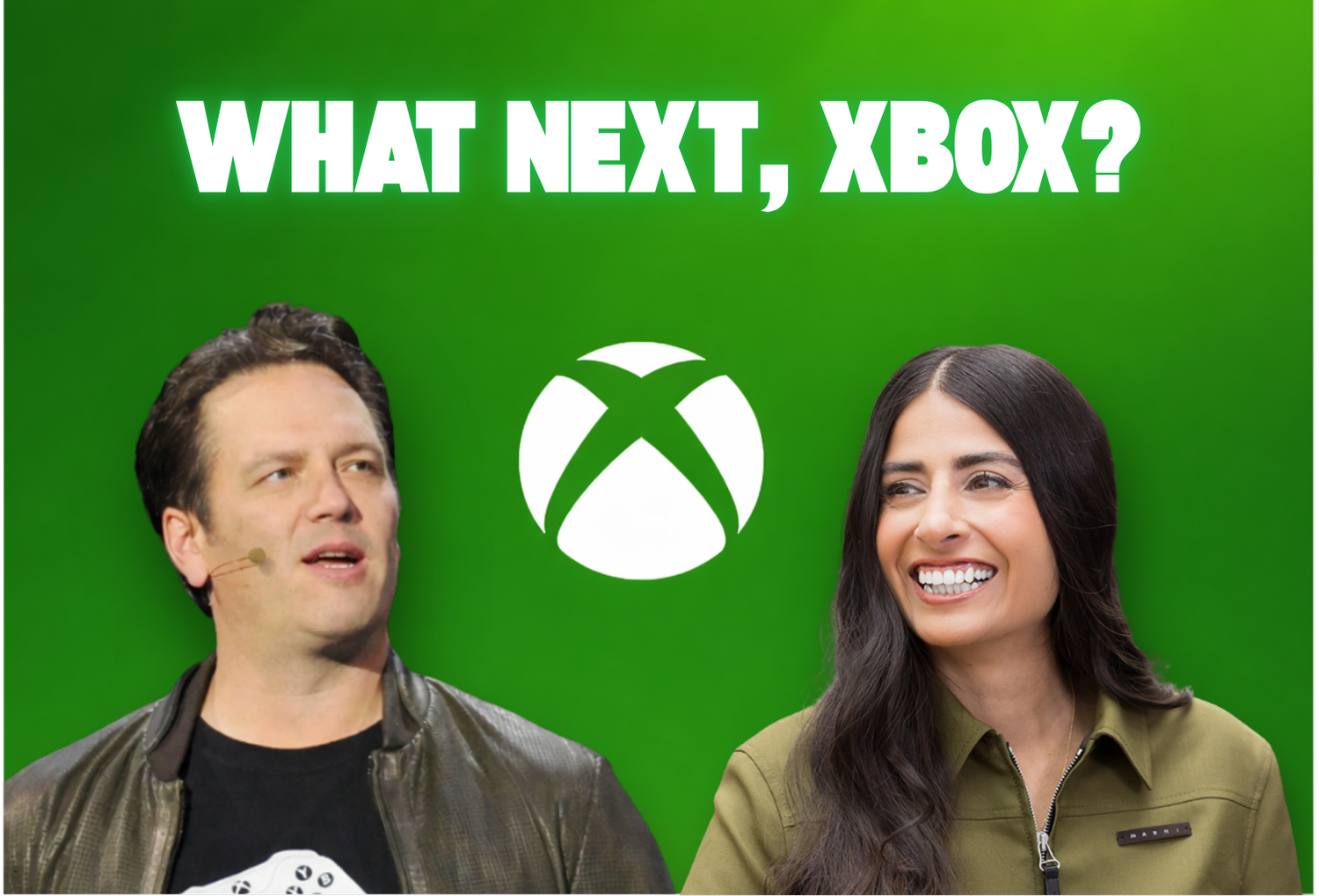
Xbox's Endgame
 Deconstructor of FunFebruary 27, 20266 min read1 views
I want to be fair before I say anything critical: Asha Sharma is, by any objective measure, an exceptional executive. Youngest EVP in Microsoft's history. COO at Instacart through its IPO.
She has built platforms at scale and delivered results at every stop. None of what follows is a knock on her ability. But ability isn't the question.
Fit is. And the more I sit with this appointment, the more I think Microsoft just made a structurally costly mistake, not because of who Sharma is, but because of what Xbox actually needs right now and why she was almost certainly not hired to deliver it. The 8% Problem To understand this decision, you have to start with the math.
Xbox content and services generate roughly $6–8 billion annually inside a company doing north of $240 billion in total revenue. That's about 8% of Microsoft, and also one of its worst-performing segments, at precisely the moment when Azure and Copilot are the only story Wall Street wants to hear. Microsoft CEO Satya Nadella isn't thinking about the console war.
He's thinking about an AI arms race and a stock price that has underperformed Google and Nvidia for the better part of a year. In that context, the appointment of an AI platform executive to run gaming is a capital allocation signal dressed up as a leadership change. " And before we canonize Phil Spencer as the gaming purist who got overruled from Redmond, the subscription-first, cloud-forward strategy was his.
Game Pass was his signature idea. The multi-platform drift was his call. Yet the butcher's bill is undeniable.
Hardware is down 32%. PlayStation has outsold Xbox by 43 million units. The rot predates this appointment, which makes the argument for a gaming-native successor harder than it seems.
Every Batman Needs a Robin Here's my actual concern. Sharma's profile, scaling platforms, optimizing monetization, and operating at a global scope, would be an excellent fit for a stable gaming division in growth mode. Xbox is not that.
Xbox is a creative organization in recovery, with nearly every major studio at a pivotal moment simultaneously. Call of Duty needs to rebuild player trust after years of stumbles. Blizzard is still finding its identity post-Activision.
Bethesda, Obsidian, and the Halo franchise are all searching for their next chapter. These studios need someone who can walk into a room of exhausted, skeptical creative teams and be believed. That kind of credibility is earned through shared language, shared instincts, and a track record that creative people recognize as real.
Deconstructor of Fun
deconstructoroffun.com